When homeowners notice a roof leak, they almost always assume a tile is cracked or missing. They look for the obvious problem: a visible gap, a broken tile, a shifted section. But in a large number of cases, the tiles are fine. The leak is coming from the ridge.
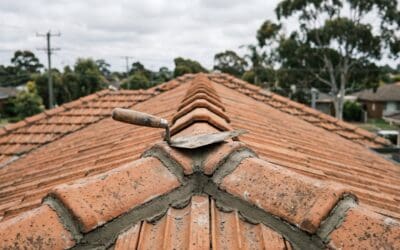
Ridge capping sits along the peaks and hips of a tiled roof. It covers the join where two roof planes meet. Underneath the ridge cap, a bed of mortar (called pointing or bedding) holds the caps in place and seals the gap. When that mortar fails, water gets in.
This is one of the most common causes of roof leaks on tiled homes in Sydney, and it is one of the most preventable. Here is how it happens, what it looks like, and what you can do about it.
What Ridge Capping Does
Every tiled roof has ridges. The main ridge runs along the top of the roof where the two largest planes meet. Hip ridges run diagonally from the main ridge down to the eaves on hipped roof designs. Some roofs also have valleys where two planes meet in an internal angle, but those are covered by valley irons, not ridge caps.
Ridge caps are shaped tiles (usually a rounded or angular profile) that sit on top of the ridge line. They overlap each other along the ridge and are bedded in mortar on both sides. The mortar holds the cap in place and creates a waterproof seal between the cap and the field tiles below.
When everything is intact, the ridge system keeps water out of the roof cavity. When the mortar cracks, crumbles, or separates from the cap or the tiles, the seal is broken.
Why Pointing Fails
The mortar used for ridge capping is exposed to the full force of Sydney’s weather. Unlike tiles, which shed water, the pointing sits on the highest points of the roof where UV exposure is greatest, wind is strongest, and temperature swings are most extreme.
Over time, the mortar goes through thousands of expansion and contraction cycles as it heats up during the day and cools at night. It absorbs moisture during rain and dries out in the sun. These cycles cause micro-cracks that gradually widen.
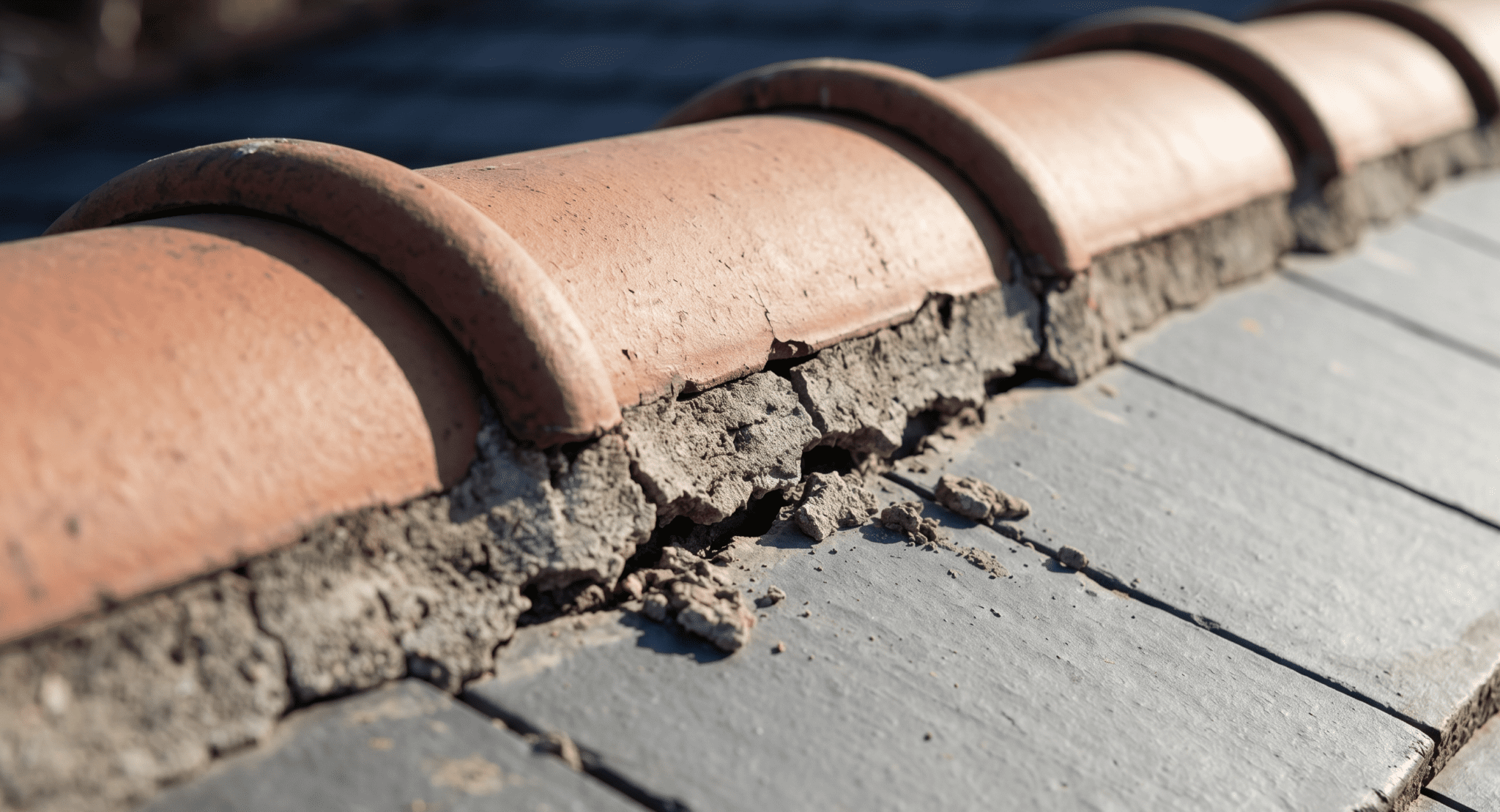
Once cracks form, water enters the mortar and accelerates the breakdown. In winter, water in the cracks can expand slightly during cold nights. Moss and lichen grow in the cracks, pushing them wider. The mortar eventually crumbles, loosens, and falls away from the ridge cap.
This process takes years. It is slow and incremental, which is why most homeowners do not notice until water starts appearing inside the house.
How to Spot the Problem Early
You do not need to climb on the roof to spot early signs of ridge capping failure. From the ground, look for these indicators.
Visible gaps between the ridge caps and the tiles below. If you can see daylight through the mortar line, the pointing has failed in that section.
Ridge caps that appear to be sitting at an angle or have shifted out of alignment. This means the mortar bed underneath has lost its grip.
Pieces of mortar on the ground around the base of the house, in the gutters, or on the driveway. This is a clear sign that the pointing is breaking apart.
Dark staining on the ceiling inside the house, particularly in rooms directly below the ridge line. This indicates water is entering through the ridge and running down the rafters into the ceiling space.
If you see any of these signs, it is worth getting a roofer to inspect the ridge before the next heavy rain event. A small repair now prevents a much bigger problem later.
The Cost of Ignoring It
A failing ridge is easy to ignore because the damage is gradual. A few cracks in the pointing do not cause an immediate flood. But over months and years, the water that enters through the ridge causes cumulative damage.
Timber battens and rafters in the roof cavity absorb moisture and begin to rot. Insulation gets wet and loses its thermal performance. Mould grows in the ceiling space, which can affect air quality inside the home. Ceiling plaster softens, stains, and eventually sags or collapses in the worst cases.
By the time a homeowner notices water stains on the ceiling, the damage above the ceiling line may already be significant. Replacing rotted timber, removing mould affected insulation, and repairing or replacing ceiling plaster adds thousands to the cost of what would have been a simple repointing job.
A ridge repoint on a standard Sydney home typically costs between $2,000 and $5,000, depending on the length of the ridges and the condition of the existing bedding. Repairing water damage to the roof structure and ceiling can cost several times that.
Repointing vs Rebedding: What Is the Difference?
These two terms are often used interchangeably, but they refer to different scopes of work.
Rebedding is the more involved process. It means removing the ridge caps entirely, cleaning off all the old mortar, laying a fresh mortar bed, and resetting the caps in their correct position. This is necessary when the original bedding has failed so badly that the caps are loose, misaligned, or missing mortar on the underside.
Repointing is the finishing step. It involves applying a flexible pointing compound along the edges where the ridge cap meets the field tiles. Modern pointing compounds (like Selleys Roof and Gutter Silicone or flexible acrylic pointing) are designed to move with the thermal expansion of the ridge, which makes them last longer than traditional rigid mortar pointing.
In many cases, both steps are needed. The caps are rebedded with fresh mortar and then repointed with a flexible sealant. This two step system provides a strong, waterproof, and durable ridge that will last 15 to 25 years before needing attention again.
Flexible Pointing vs Traditional Mortar
Traditional sand and cement mortar has been used for ridge pointing in Australia for decades. It works, but it has a known weakness: it is rigid. It does not flex with the thermal movement of the tiles and caps. Over time, this rigidity causes the cracks that lead to failure.
Flexible pointing compounds were developed to address this. They remain slightly elastic after curing, which means they can absorb the expansion and contraction without cracking. Most professional roofers in Sydney now use flexible pointing as standard because it lasts significantly longer than rigid mortar.
If your ridge was pointed with traditional sand and cement mortar (common on homes built before the 2000s), it is likely that the pointing has already cracked or will crack soon. Upgrading to flexible pointing during a repoint job is one of the best investments you can make in your roof’s longevity.
What About the Tiles Themselves?
Ridge capping failure is a pointing problem, not a tile problem. The field tiles on your roof may be in perfect condition while the ridge mortar above them is falling apart.
However, if your roof needs a ridge repoint and some of the field tiles near the ridge are cracked or damaged, it makes sense to replace them at the same time. A roofer who is already working on the ridge can swap out a few tiles with minimal additional labour.
If you need replacement tiles for a repair alongside a ridge repoint, Roof Tile Recyclers can supply matching tiles in both new and recycled options. We also stock ridge cap tiles for common profiles.
Preventing Ridge Failure
Prevention comes down to two things: using the right materials and scheduling periodic inspections.
For new builds and re-roofs, specify flexible pointing from the start. Do not accept rigid mortar pointing on a new installation.
For existing roofs, have the ridge inspected every 5 to 10 years. A roofer can check the pointing condition during a general roof inspection or gutter clean. Catching early cracks and patching them with flexible sealant is far cheaper than waiting for a full failure.
Keep gutters clean and clear. Blocked gutters cause water to back up under the bottom course of tiles, but they also indicate that debris is accumulating on the roof. That debris holds moisture against the pointing and speeds up degradation.
Get Your Ridge Checked
If your home is more than 15 years old and the ridge has not been repointed, it is worth getting an inspection. If you can see cracked or missing mortar from the ground, do not wait.
Contact Roof Tile Recyclers if you need pointing products, replacement ridge caps, or field tiles for a ridge repair. We supply the materials. Your roofer does the install. Between the two, your ridge gets fixed properly and stays fixed.