Ask a real estate agent what adds value to a home and you will hear the usual answers: kitchens, bathrooms, landscaping, and street appeal. Ask specifically about the roof and most will say something general about condition and presentation. Press further and ask about terracotta versus concrete, and you start getting mixed responses.
The common belief in the market is that terracotta tiles add value. They look better. They last longer. They signal quality. But is any of that backed up by what buyers actually pay? Or is it an assumption that has never been tested against the numbers?
This article looks at what terracotta tiles actually contribute to property value, where the assumption holds, and where it falls apart.
The Case for Terracotta Adding Value
There are reasonable arguments for why terracotta tiles should increase a property’s appeal and, by extension, its value.
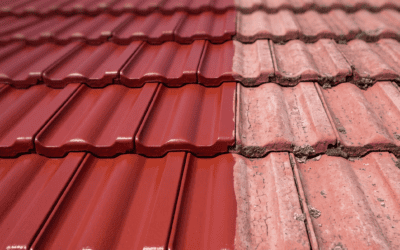
Terracotta holds its colour. Unlike concrete tiles, which rely on a surface coating that fades over time, terracotta tiles get their colour from the clay body and firing process. A terracotta roof installed 30 years ago still shows its original colour tone, even if it has developed a natural patina. This means terracotta roofs look better for longer without repainting, which is a visual advantage that buyers can see from the kerb.
Terracotta lasts longer. Manufacturers rate terracotta tiles at 50 to 75 years or more. Concrete tiles are typically rated at 30 to 50 years. A longer remaining lifespan means less future capital expenditure for the buyer. In theory, that should be worth something.
Terracotta is associated with quality. In the Australian market, terracotta has traditionally been the premium roofing material. Builders of higher end homes specified terracotta because it cost more and was perceived as a better product. That association between terracotta and quality persists in the market today.
Terracotta suits heritage and character homes. In suburbs with older housing stock, heritage conservation areas, and character home provisions, terracotta is often the required material for roof repairs and replacements. Homes that retain their original terracotta roofing are seen as more authentic, which appeals to a specific buyer segment.
Where the Assumption Gets Shaky
The difficulty with claiming that terracotta “adds value” is that property value is determined by dozens of variables. Isolating the contribution of one roofing material is close to impossible with the data available to most homeowners and agents.
No major property valuation index in Australia breaks down sale prices by roofing material. CoreLogic, Domain, and similar platforms track sale prices by location, dwelling type, land size, and bedroom count. They do not track whether the roof is terracotta or concrete.
This means the “terracotta adds value” claim is based on perception, not measured data. It is an assumption that has been repeated so often that it is treated as fact, even though no one can point to a dataset that proves it.
The reality is that buyers react to the overall presentation of a home. A concrete roof that has been recently restored (cleaned, repointed, repainted) can look as good as a terracotta roof. A terracotta roof that has cracked tiles, failing pointing, and visible moss does not add value. It adds to the buyer’s mental list of things that need fixing.
Condition matters more than material. A well maintained concrete roof on a well presented home will not lose a sale to an identical home with a poorly maintained terracotta roof.
The Renovation Return Question
Some homeowners consider re-roofing from concrete to terracotta as a value adding renovation. The logic is straightforward: spend money on terracotta, get more back at sale.
The problem with this logic is the cost. Re-roofing a standard Sydney home from concrete to terracotta can cost $25,000 to $40,000 or more, depending on the size of the roof, the terracotta profile chosen, and whether the roof structure needs reinforcing to handle the heavier tiles.
For that investment to “add value,” the sale price would need to increase by at least the same amount. In practice, roof upgrades rarely generate a dollar for dollar return. The kitchen and bathroom remain the renovations with the strongest resale returns. Roofing is a maintenance and presentation investment, not a profit generating one.
Where the calculus changes is when the existing concrete roof is at the end of its life and needs replacing anyway. In that scenario, the incremental cost of choosing terracotta over concrete (the difference in material cost, not the full re-roof cost) is smaller. And if the home is in a suburb where terracotta is the dominant roofing material, matching the neighbourhood standard can help the home sell faster, even if it does not sell for measurably more.
What Buyers Actually Notice
Conversations with real estate agents and property stylists in Sydney suggest that buyers notice the roof in two specific situations.
The first is when the roof looks bad. Cracked tiles, faded colour, visible moss, and sagging ridge lines all trigger concern. Buyers worry about leaks, hidden damage, and the cost of fixing the problem. A roof in poor condition actively detracts from value.
The second is when the roof looks distinctively good. A freshly restored terracotta roof on a character home in a leafy suburb catches the eye. It signals care, quality, and attention to detail. In these cases, terracotta does contribute to the overall impression that justifies a higher price. But it is the presentation, not just the material, doing the work.
In most other situations, buyers barely think about the roof. If it looks fine, they move on to the kitchen, the bathroom, the backyard, and the floorplan. The roof becomes a non issue, which is exactly what you want when selling.
The Heritage Premium
There is one segment of the market where terracotta tiles have a more direct link to value: heritage and character homes in conservation areas.
Buyers who specifically seek out heritage homes value original materials. A home with its original terracotta roof intact is more desirable in this market than one that has been re-roofed with concrete or metal. The authenticity of the materials is part of what the buyer is paying for.
In these cases, maintaining the terracotta roof (or sourcing matching recycled terracotta tiles for repairs) is a direct investment in preserving the property’s value. Replacing a heritage terracotta roof with a different material would likely reduce the home’s appeal to its target buyer.
Practical Advice for Homeowners
If you are deciding between terracotta and concrete for a new roof or re-roof, base your decision on the factors that matter to your situation.
Choose terracotta if you are building or re-roofing a home you plan to keep for 20 or more years and want to minimise long term maintenance. The longer lifespan and better colour retention will pay off over time through fewer restorations.
Choose concrete if budget is a priority and you are comfortable with periodic restorations (every 15 to 20 years). Concrete tiles perform well and cost less upfront.
Do not re-roof from concrete to terracotta purely as a “value add” renovation. The return on investment is unlikely to justify the cost unless the existing roof already needs replacing.
If your home has a terracotta roof that needs repairs, invest in those repairs. Maintaining the terracotta in good condition protects whatever value premium it provides. Source matching tiles from a recycled tile specialist to keep the roof consistent.
The Honest Answer
Do terracotta tiles add value to your property? Probably, but less than most people assume, and only when the roof is in good condition and the home is in a market where buyers appreciate the material.
The bigger driver of roof related value is condition, not material. A well maintained roof in any material protects value. A neglected roof in any material erodes it.
If your terracotta or concrete roof needs attention, contact Roof Tile Recyclers for new or recycled tiles. We stock both Monier and Bristile terracotta alongside a full range of concrete profiles.