Choosing a roof tile for a new build seems straightforward. You pick a colour, pick a profile, and the builder orders it. The tile arrives on site, goes up on the roof, and you do not think about it again for years.
That is how it works when the choice is right. When the choice is wrong, the costs show up later, sometimes years later, in ways that are hard to anticipate at the selection stage. These are not manufacturing defects or installation errors. They are consequences of picking a tile that does not suit the roof design, the local conditions, or the long term reality of owning the home.
This article covers the hidden costs that come from common tile selection mistakes on new builds in Sydney and NSW.
Choosing Based on Colour Alone
The most common selection mistake is picking a tile purely by colour. Homeowners visit a display centre, see a swatch or a sample board, and choose the shade they like best. The profile, material type, and performance characteristics become secondary.
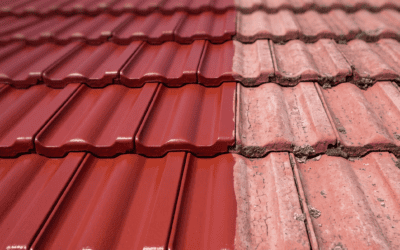
The problem is that colour is the least durable property of a concrete roof tile. As covered in our article on roof tile colour fading, the surface coating on concrete tiles degrades under UV exposure. A colour that looks bold in the display centre will fade over 15 to 20 years on the roof.
Choosing a very dark colour (charcoal, black) accelerates the heat load on the roof and increases the rate of UV degradation. The tile fades faster, and the home underneath gets hotter in summer, driving up cooling costs.
Choosing a colour that is unique or non standard creates a different problem. If you need replacement tiles in 10 or 15 years, a colour that was available when the home was built may no longer be in production. You then face the choice of a visible mismatch or a full re-roof to achieve uniform colour.
The hidden cost: an early restoration or repaint (often $8,000 to $15,000) that could have been delayed by choosing a lighter colour or a through-body coloured tile from the start.
Ignoring the Roof Pitch
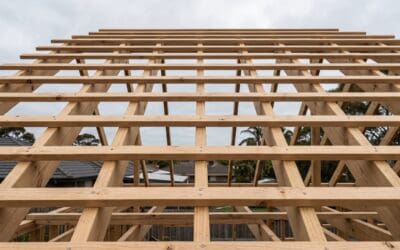
Roof tiles have minimum pitch requirements. The pitch is the angle of the roof slope, and it determines how quickly water runs off the surface. Every tile profile has a minimum pitch below which it cannot reliably shed water without risk of wind driven rain getting under the overlaps.
High profile tiles (barrel shapes, deep S curves) generally work well on steeper pitches where gravity moves water quickly through the channels. Flat profile tiles can be used on lower pitches, but they need careful attention to the interlock system and may require additional sarking underneath as a secondary water barrier.
The hidden cost shows up when a tile is installed on a pitch that is at or below its minimum rating. Water pools in the overlaps during heavy rain. Wind pushes water sideways and upward under the tile edges. Over time, moisture gets into the sarking and battens, causing rot, mould, and eventually leaks.
Fixing this is expensive. It may require lifting tiles, replacing damaged battens, adding or replacing sarking, and potentially changing the tile to a profile rated for the actual pitch. A problem that starts as a damp patch in the ceiling can escalate into a structural repair costing thousands.
Not Accounting for Wind Exposure
Sydney’s wind conditions vary significantly by location. A home on a ridgeline in the Blue Mountains faces very different wind loads compared to a home in a sheltered street in Parramatta. Coastal homes face different conditions again.
Australian Standards (AS 4055) classify sites by wind region and terrain category. The wind classification determines how tiles must be fixed: loose laid, nailed, clipped, or a combination. It also influences which tile profiles are suitable.
The hidden cost comes when a tile with poor wind resistance is installed on a high exposure site without adequate fixing. Tiles lift, shift, or blow off during storms. Each event requires emergency repairs, and if tiles are damaged beyond reuse, replacements need to be sourced.
If the tile profile is discontinued at that point, replacing the damaged tiles becomes a matching exercise that depends on recycled tile availability. If matching tiles cannot be found, the homeowner faces a partial mismatch or a full re-roof.
The cost of upgrading fixings at the time of construction is minimal. The cost of remediation after storm damage is not.
Selecting a Tile That Will Be Discontinued
This is a cost that almost no one thinks about at the building stage. You choose a tile from the current catalogue, it goes on the roof, and 15 years later you need a few replacements. You call the manufacturer and discover the profile has been retired.
Tile manufacturers regularly update their product lines. Monier and Bristile both cycle through profiles over time. A tile that is current today may not be available in 2035 or 2040.
There is no guaranteed way to predict which tiles will be discontinued, but some indicators can guide your choice. High volume, popular profiles are more likely to stay in production longer than niche or specialty profiles. Profiles that have been in the range for many years have proven market demand. Brand new profiles that are untested in the market carry more discontinuation risk.
The hidden cost: when your tile is no longer available and you need 30 replacements after a storm, you face either a higher cost for recycled tiles in a rare profile, or the much higher cost of re-roofing the entire house.
Underestimating Weight
Roof tiles vary in weight by material and profile. Concrete tiles are heavier than terracotta in most profiles. High profile tiles are heavier than flat tiles because they have more material per unit area.
The roof structure (rafters, battens, connections) is designed to carry a specific load. If the tile selected for the build is heavier than what the structure was designed for, problems develop over time. Battens can sag. Rafters can deflect. In extreme cases, connections can fail.
This is less of an issue on new builds where the structural engineer specifies the frame based on the chosen tile. But it becomes a serious issue when homeowners later decide to re-roof with a heavier tile without checking the structure first.
The hidden cost: structural reinforcement or frame repair that can run into several thousand dollars, on top of the roofing cost itself.
Forgetting About Maintenance Access
Some tile profiles are harder to walk on than others. High profile barrel tiles in particular are difficult to traverse without risking cracks. Every time someone needs to access the roof for maintenance, gutter cleaning, antenna work, or solar panel servicing, there is a risk of tile breakage.
Flat and low profile tiles are easier to walk on and less prone to cracking under foot traffic. For homes where roof access will be frequent (solar panels, air conditioning units on the roof, regularly cleaned gutters), a walkable tile profile saves money over the long term.
The hidden cost: replacing cracked tiles after every maintenance visit. Over the life of the roof, this accumulates into a meaningful expense, especially if the tile profile has been discontinued by that point.
How to Avoid These Costs
The good news is that all of these hidden costs are avoidable with better decision making at the selection stage.
Work with your builder and roofer to select a tile that suits the roof pitch, wind exposure, and structural capacity of your home. Do not just pick from a colour chart. Ask about minimum pitch ratings, wind performance, weight per square metre, and expected maintenance requirements.
Choose a tile profile that has strong market demand and a long production history. This gives you the best chance of being able to source replacements in 15 or 20 years.
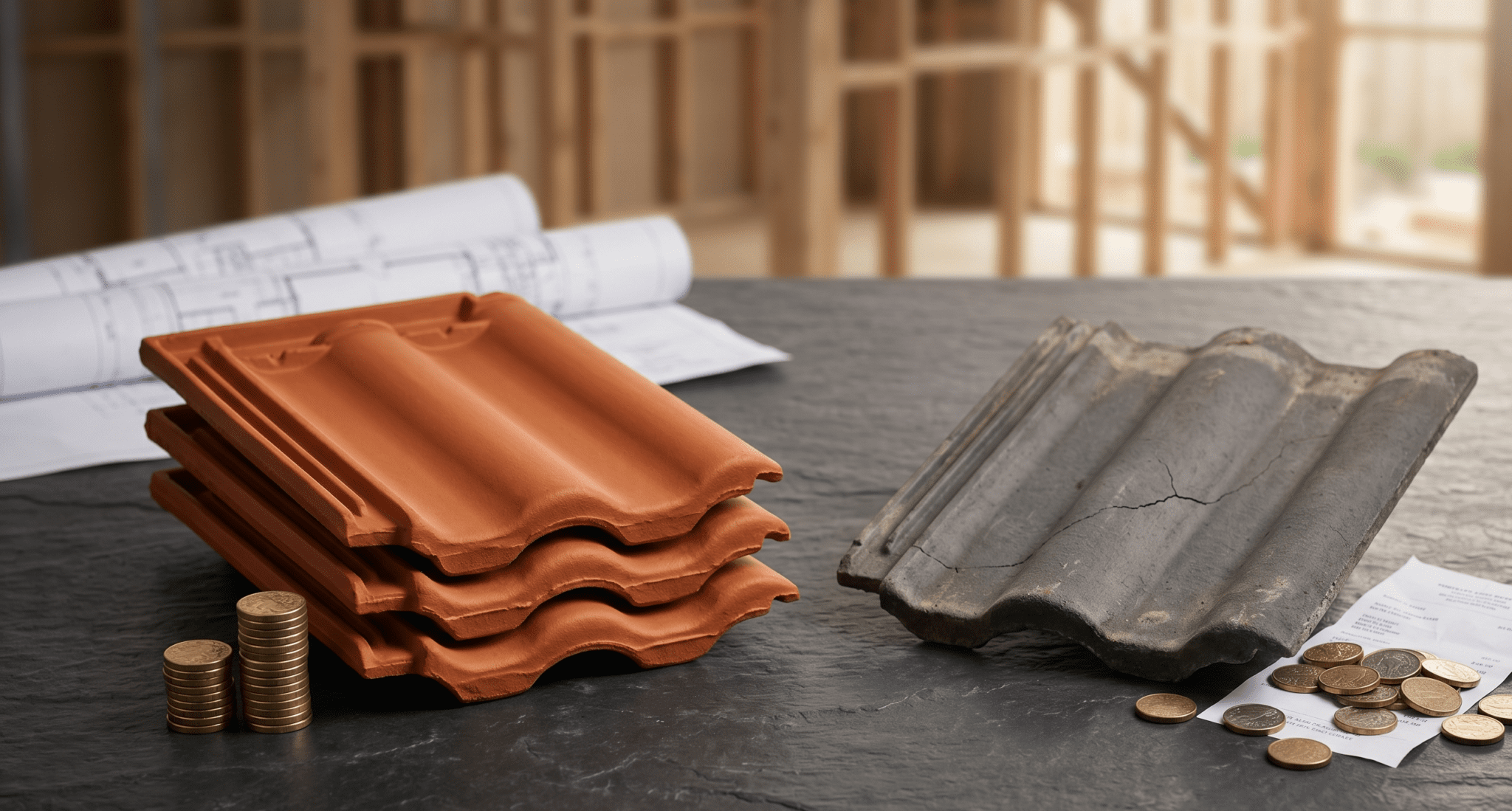
Consider terracotta for colour retention if budget allows. If choosing concrete, ask about through-body coloured options to extend the time before a repaint is needed.
Keep a few spare tiles from the build. Most builders will let you keep a small stack of leftover tiles. Store them flat and covered. Having 20 to 30 spares on hand means you can handle minor repairs without a sourcing exercise.
If you need help choosing the right tile for your new build, or if you need replacement tiles for an existing home, contact Roof Tile Recyclers. We supply both new and recycled tiles and can advise on profile selection based on your specific needs.