If you own a home built between the 1960s and early 2000s, there is a good chance the tiles on your roof are no longer being made. Manufacturers have retired dozens of profiles over the years, and some of them have become incredibly difficult to source.
This matters when you need a repair. A cracked tile, storm damage, or a section removed for solar panel installation all require replacement tiles that match the existing roof. If your profile has been discontinued, you cannot just order new ones from the manufacturer. You need to find them second hand.
Here are seven tile profiles that homeowners and roofers across Sydney struggle to find in 2026, along with what we know about each one.
1. Monier Horizon
The Monier Horizon was one of the most popular flat profile concrete tiles in Australia during the 1990s and early 2000s. Its clean, modern lines made it a favourite for project homes across Western Sydney, the Hills District, and the South West corridor.
Monier discontinued the Horizon and replaced it with updated flat profiles that have slightly different dimensions. The problem is that those new profiles do not sit flush next to an original Horizon tile. The overlap is different, the edge detail has changed, and the colour does not match the aged originals.
Demand for second hand Horizon tiles remains high because so many homes were built with this profile. If you have a Monier Horizon roof that needs a repair, contact a specialist recycler early. Stock comes and goes depending on what demolition and renovation projects are happening around Sydney.
2. Bristile Hawthorn
The Bristile Hawthorn is a terracotta shingle profile that was popular on character homes and heritage style builds. Its smaller format and distinctive shape gave roofs a textured, layered appearance that is hard to replicate with any other tile.
Bristile stopped producing the Hawthorn years ago, and because it was a specialty profile (not a mass market product), fewer of them were installed compared to standard profiles. That makes the supply pool smaller.
Finding Hawthorn tiles in good condition is one of the toughest sourcing jobs in the recycled tile market. When they do come in, they are typically snapped up quickly by homeowners doing heritage restorations.
3. Monier Marseilles (Concrete Version)
The Marseilles profile has a long history in Australian roofing. Monier produced both terracotta and concrete versions of this classic French inspired design. While the terracotta Marseilles is still available in some form, the concrete version has been out of production for years.
Many homes in Sydney’s older established suburbs have concrete Marseilles tiles. The profile has a high, rounded barrel shape that is very different from the flatter profiles that dominate modern tile lines. Swapping in a different profile is not an option because the height and water channel of the Marseilles do not match anything currently in production.
Recycled concrete Marseilles tiles are available through specialist suppliers, but stock levels vary. If you have this profile and need a repair, do not wait until the damage spreads. Source the tiles while they are available.
4. Wunderlich Tiles
Wunderlich was a major Australian building materials company that produced terracotta roof tiles for decades. The company was eventually absorbed into what became Monier, and the original Wunderlich profiles were phased out.
Some Wunderlich tile profiles date back to the 1930s and 1940s. Homes with original Wunderlich roofs are often in heritage listed areas where council regulations require like for like replacement. That means you need the exact same tile, not a modern equivalent.
The supply of Wunderlich tiles is small and getting smaller every year. Each demolition or renovation that removes Wunderlich tiles is a potential source, but only if someone collects them before they end up in a skip bin.
5. Monier Roman
The Monier Roman was a concrete tile with a distinctive S shaped profile. It was widely used on homes across NSW during the 1970s and 1980s, especially in suburbs that were developed during that era.
The Roman profile has been discontinued in favour of updated designs. Like the Horizon, the newer profiles do not match the original Roman dimensions closely enough for a seamless repair.
The good news is that because the Roman was so widely used, there is a larger pool of second hand stock available compared to some of the rarer profiles on this list. At Roof Tile Recyclers, we regularly receive Roman tiles from demolition and renovation sites across Sydney. The key is checking availability at the right time.
6. Bristile 50 (Concrete)
The Bristile 50 was a flat to low profile concrete tile that Bristile produced for the project home market. It was a clean, simple design that sat well on the suburban homes of the 1980s and 1990s.
As Bristile updated their product range, the 50 was replaced by newer profiles. Homes built with the Bristile 50 are now reaching the age where individual tiles start cracking or shifting, and homeowners are finding out that the replacement tile they need no longer exists in new form.
Second hand Bristile 50 tiles are available through recyclers, but colour matching can be tricky. The original factory colours have aged over decades, and finding a recycled tile in a close colour match requires sorting through batches from multiple sources.
7. Monier Nouveau
The Monier Nouveau was a concrete tile with a bold, angular profile that stood out from the more traditional shapes in Monier’s range. It was popular in the late 1980s and through the 1990s on homes that wanted a contemporary look.
The Nouveau has been discontinued, and its sharp angular design means there is no close substitute among current profiles. A home with Nouveau tiles that needs a repair either finds recycled Nouveau tiles or faces a complete re-roof to achieve a uniform appearance.
Stock of recycled Nouveau tiles is limited because it was never as widely used as profiles like the Horizon or Roman. When demolition sites produce Nouveau tiles, they tend to be in smaller quantities.
Why These Profiles Disappear
Tile manufacturers update their product lines for several reasons. Consumer tastes change. Manufacturing technology improves. Some profiles are more expensive to produce than others. And when demand for a particular profile drops below a certain level, it no longer makes commercial sense to keep the moulds running.
None of that helps the homeowner who needs three tiles to fix a leak on a roof that was installed 30 years ago. The tiles on their roof are perfectly good. They just cannot buy more of them from the company that made them.
This is exactly why recycled tile suppliers exist. Every time a roof comes off during a demolition or renovation, there is an opportunity to save those tiles and match them with someone who needs them. It is a straightforward supply chain that benefits everyone involved.
How to Find Your Discontinued Profile
If your tile profile is on this list (or if you suspect it has been discontinued), here is what to do:
Take a clear photo of the tile from above, showing the full face. Take a second photo of the underside, which usually has a manufacturer stamp, profile name, or production code. Measure the exposed width and height of the tile. Then send those details to Roof Tile Recyclers.
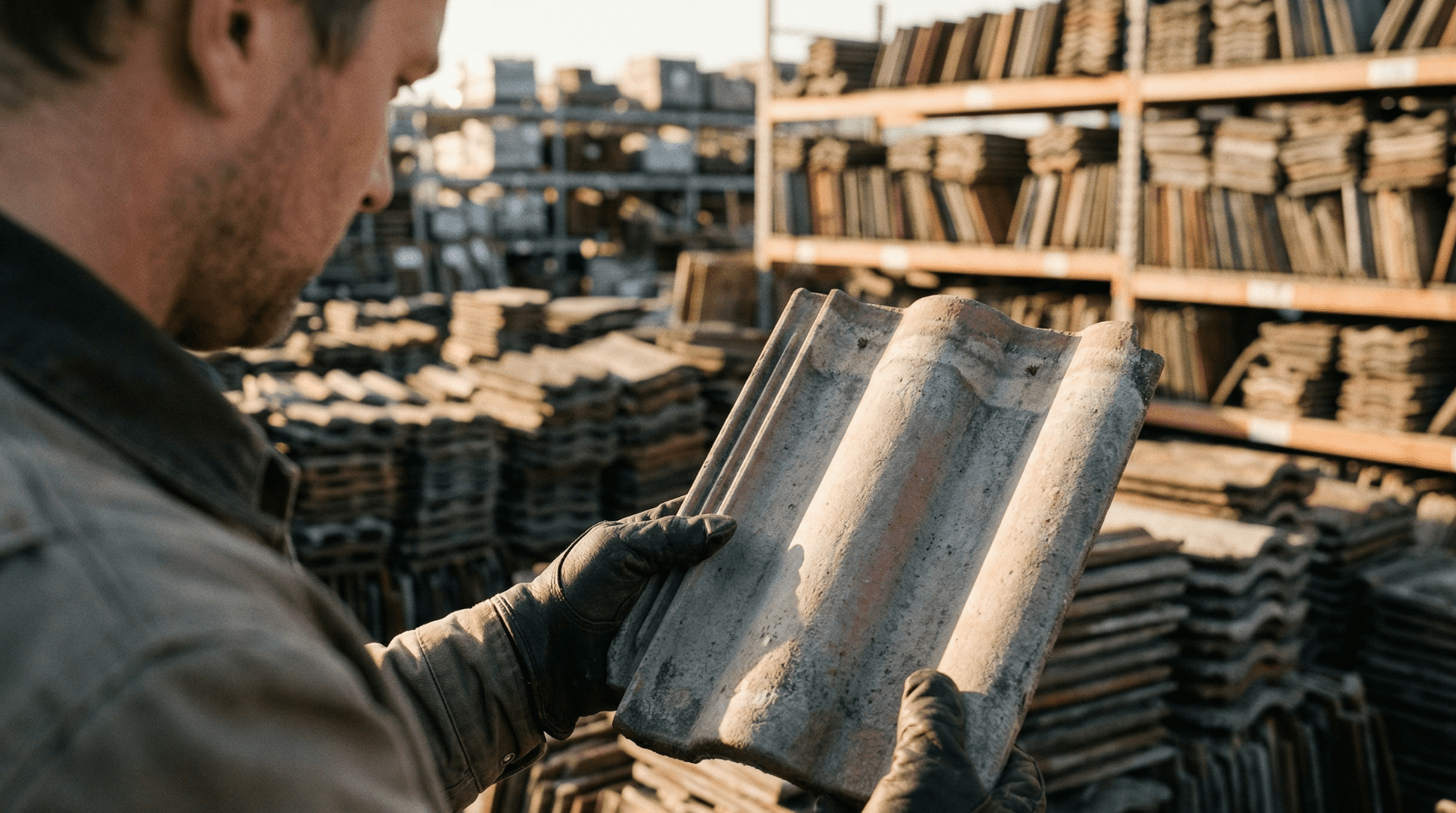
We carry between 150,000 and 200,000 recycled roof tiles at our warehouse in Prospect. If we have your tile in stock, we can confirm quickly and arrange delivery across Sydney and NSW. If we do not have it right now, we can let you know when it comes in.
The earlier you start looking, the better your chances. Waiting until the damage gets worse only makes the repair bigger and the search more urgent.