This is one of the most common questions homeowners in Sydney ask when they need to repair, replace, or restore a tiled roof. Concrete and terracotta are the two dominant tile types on homes across NSW, and each one handles Sydney’s weather differently.
The short answer is that both can last a very long time. But the way they age, the problems they develop, and the maintenance they need are quite different. If you are deciding between the two for a new roof, or trying to figure out which second hand tiles to source for a repair, this breakdown will help.
How Long Each Tile Type Is Designed to Last
Concrete roof tiles are generally rated to last between 30 and 50 years. In practice, many concrete tiles installed in the 1970s and 1980s are still doing their job today, well past the 40 year mark. The key factor is maintenance. A concrete tile that has been repointed and kept free of moss can push well beyond its expected lifespan.
Terracotta tiles have a longer theoretical lifespan. Manufacturers like Monier and Bristile have rated their terracotta products to last 50 to 75 years or more. Some terracotta roofs in Sydney’s older suburbs have been in place for over 80 years and are still functional. The material itself is extremely durable when it is fired correctly.
So on paper, terracotta wins the longevity race. But lifespan on a spec sheet and lifespan on a roof in Western Sydney are two different things.
How Sydney Weather Affects Concrete Tiles
Sydney’s climate throws a few specific challenges at concrete tiles.
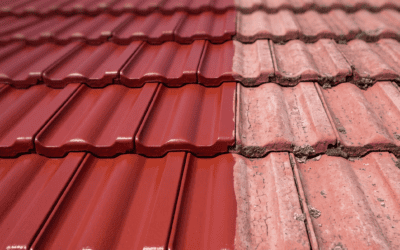
The first is UV exposure. Sydney gets strong, direct sunlight for much of the year. Over time, UV breaks down the surface coating on concrete tiles, causing the colour to fade. This is purely cosmetic at first, but once the protective layer wears away, the tile becomes more porous. Water absorption increases, and that is where the real problems start.
The second issue is moisture cycling. Sydney’s weather swings between dry stretches and heavy rain events, sometimes within the same week. Concrete tiles absorb small amounts of moisture during rain and release it during dry periods. Over decades, this constant expansion and contraction weakens the tile. Hairline cracks develop. Edges start to crumble.
The third challenge is biological growth. Moss, lichen, and algae thrive on concrete tiles, especially on south facing roof sections that stay damp longer. Biological growth holds moisture against the tile surface, speeding up degradation.
None of these issues mean concrete tiles fail quickly. They just mean that a concrete roof in Sydney will need more attention over its life than the same roof in a drier climate.
How Sydney Weather Affects Terracotta Tiles
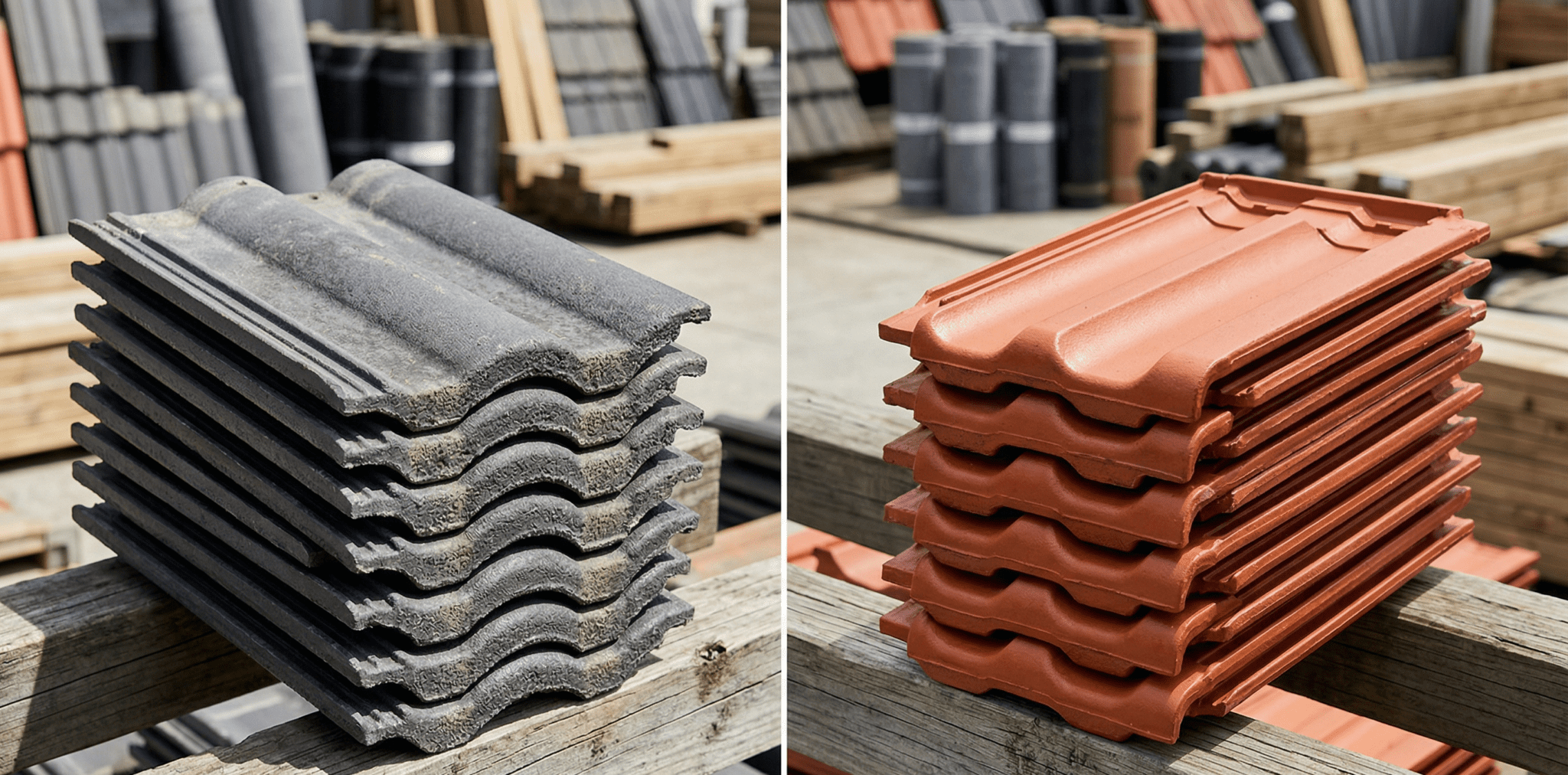
Terracotta handles UV and moisture differently. Because the tile is kiln fired at extremely high temperatures, the material is denser and less porous than concrete. It does not absorb water the same way, which means the expansion and contraction cycle is less of a problem.
Colour retention is also better. The colour in a terracotta tile runs through the body of the material, not just on the surface. That is why terracotta roofs from the 1950s and 1960s still look like they have colour, while concrete roofs from the same era look washed out.
However, terracotta is not bulletproof. The main risk in Sydney’s weather is physical impact. Terracotta is harder than concrete, but it is also more brittle. Hailstorms, falling branches, and foot traffic during maintenance can crack terracotta tiles more easily than concrete ones. Sydney has experienced several significant hail events in recent years, and terracotta roofs tend to suffer more visible damage.
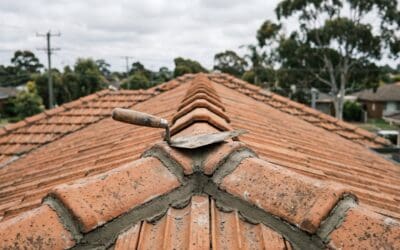
The other issue is the bedding and pointing that holds the ridge caps in place. Regardless of tile type, the pointing on a terracotta roof degrades over time and needs to be redone every 15 to 25 years. This is not a tile failure, but it is a maintenance cost that comes with both systems.
Cost Differences Over the Life of the Roof
New terracotta tiles cost more upfront than concrete. Depending on the profile and colour, terracotta can be 30 to 50 percent more expensive per tile. For a full new roof, that adds up to thousands of dollars in additional material cost.
But the total cost of ownership is closer than the sticker price suggests. Concrete roofs typically need a restoration (cleaning, repointing, repainting) every 15 to 20 years. Each restoration can run into several thousand dollars depending on the size of the roof and the condition of the tiles.
Terracotta roofs also need repointing, but they rarely need repainting because the colour does not fade the same way. That removes one of the biggest recurring costs.
Over a 50 year period, the total spend on a concrete roof (purchase price plus two or three restorations) can end up close to the total spend on a terracotta roof (higher purchase price but fewer restorations). Neither option is clearly cheaper across the full life of the roof.
What About Second Hand Tiles?
This is where the comparison gets interesting for repairs and partial replacements.
Second hand concrete roof tiles are generally easier to find because concrete was the dominant material used on homes built from the 1960s through the 1990s. The supply of recycled concrete tiles is larger, and pricing is lower.
Second hand terracotta tiles are harder to source in certain profiles. Older terracotta profiles from manufacturers that have since changed their product lines can be difficult to match. When they are available, they tend to hold more value because of the limited supply and the demand from heritage and character home owners.
At Roof Tile Recyclers, we stock both concrete and terracotta second hand tiles. We carry Monier, Bristile, and other profiles across a wide range of colours and styles. If you are not sure what type of tile you have, our team can help you identify and match your tile from a photo and measurements.
Which One Should You Choose?
There is no single right answer. It depends on your budget, your priorities, and how long you plan to stay in the home.
If upfront cost matters most and you are comfortable with periodic restorations, concrete is a solid choice. It performs well in Sydney’s climate as long as it is maintained.
If you want a roof that holds its colour, absorbs less water, and needs fewer interventions over its lifetime, terracotta is worth the higher initial investment. The material has proven itself over decades on Sydney roofs.
For repairs, the decision is simpler. Match what you already have. Mixing concrete and terracotta on the same roof creates problems with weight distribution, water flow, and appearance. If you need a few replacement tiles, source the same material and profile.
Get the Right Tile for Your Roof
Whether you are looking for new Monier concrete tiles, new Bristile terracotta, or second hand replacements in a discontinued profile, Roof Tile Recyclers can help. We stock both new and recycled tiles and deliver across Sydney and NSW.
Call us on (02) 9756 3350 or send us an enquiry and we will help you find the right tile for your roof.