An airless spray machine is one of the most expensive tools a roofer or painter will buy. A mid range electric unit costs a few thousand dollars. A petrol driven hydraulic machine can cost well over ten thousand. These machines earn their keep on job sites, but only when they are running properly.
The difference between a machine that lasts five years and one that lasts fifteen comes down to maintenance. And the most common reason machines fail early is not a manufacturing defect. It is neglect.
This article covers the service intervals that matter, what happens when maintenance is skipped, and how to get the most life out of your investment.
Daily Maintenance: After Every Use
This is the maintenance step that separates professionals from operators who burn through machines every few years.
After every job, the spray system needs to be flushed. The material left inside the pump, hose, and gun will dry and harden if it is not cleaned out. Roof coatings and thick membranes are especially problematic because they cure to a solid state. Once cured inside the pump cylinder or hose, the material is almost impossible to remove without disassembly.
The flushing process is straightforward. Run clean water (or solvent, depending on the material being sprayed) through the system until the output runs clear. This takes five to ten minutes and uses a small amount of water or solvent.
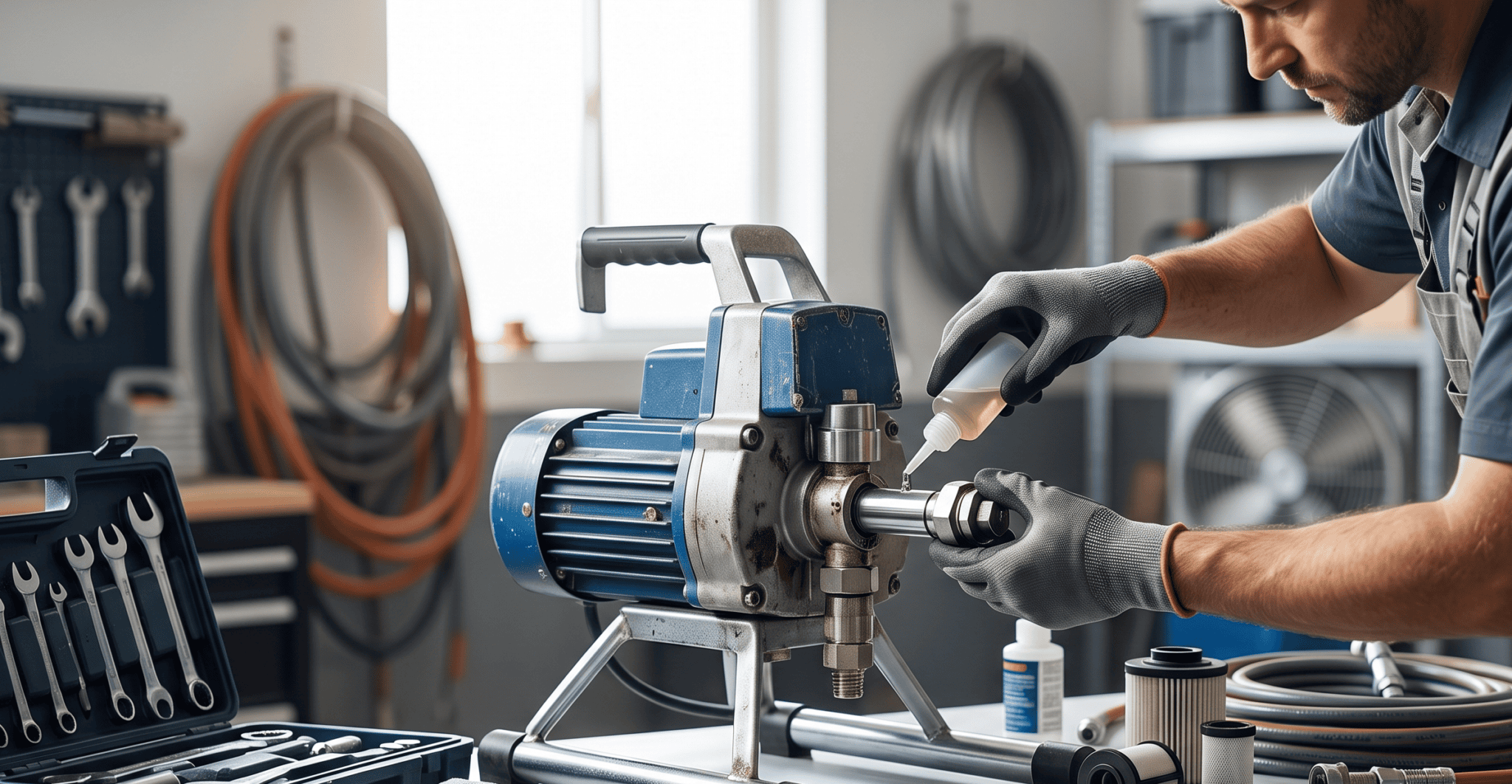
After flushing, apply throat seal liquid (TSL) to the packing nut area of the pump. TSL lubricates the piston rod and packing, which are the components most prone to wear. Skipping this step allows the packing to dry out, which leads to scoring on the piston rod and premature seal failure.
If the machine will be stored for more than a few days, run pump protectant through the system instead of leaving it filled with water. Water sitting in the pump can cause internal corrosion. Products like Graco Pump Armour or Wagner’s equivalent protect the internals during storage.
At Roof Tile Recyclers, we stock TSL, pump armour, and flushing accessories for both Graco and Wagner machines.
Weekly Checks: During Active Use
If you are using your sprayer multiple days per week (as most roofers do during busy periods), a weekly check catches small problems before they become big ones.
Check the inlet strainer. This is the filter at the suction end of the machine that prevents debris from entering the pump. A clogged inlet strainer forces the pump to work harder, which increases wear and can cause pressure fluctuations. Remove it, clean it, and replace it if the mesh is damaged.
Inspect the hose for kinks, abrasion, and soft spots. Airless hoses operate at high pressure. A hose with a worn section or a persistent kink is a failure risk. Replace any hose that shows visible damage to the outer cover.
Check the gun filter. The filter inside the spray gun catches particles that get past the inlet strainer and pump filter. A clogged gun filter reduces spray pressure at the tip and causes uneven coverage. Clean or replace the gun filter weekly during heavy use.
Inspect the spray tip for wear. A worn tip produces a wider, less defined spray pattern and uses more material than intended. Tips are consumable items and should be replaced when the pattern widens noticeably. Keep spare tips on hand so a worn one can be swapped immediately.
Monthly Service: Pump and Engine
Once a month during active use, give the machine a more thorough going over.
For petrol driven machines, check the engine oil level and condition. Change the oil according to the engine manufacturer’s schedule (typically every 50 to 100 hours of operation for Honda engines). Check the air filter and clean or replace it if dirty. Inspect the spark plug and replace it annually or sooner if the engine is hard to start.
For electric machines, check the power cord and plug for damage. Inspect the motor housing for dust buildup and clean the ventilation openings. Electric motors can overheat if airflow is restricted by dust or debris.
For all machines, check the pump packings. If the machine is dripping material or water from around the piston rod area during operation, the packings are worn and need replacing. Packing replacement is a routine service item and is far cheaper than replacing the entire pump assembly.
Check the manifold filter (the filter between the pump and the hose). This filter catches particles that have passed the inlet strainer. Clean it monthly and replace it if the mesh is damaged.
Seasonal Service: Before and After Peak Season
Most roofers in Sydney have a peak season that aligns with the drier months (spring through autumn). Before the busy period starts and after it ends are the right times for more thorough servicing.
Before peak season, do a full check of all filters, hoses, tips, and pump condition. Replace any components that are showing wear. It is cheaper to replace a worn packing set before the season than to have the pump fail mid-job and lose a day of production.
After peak season, flush the system thoroughly, run pump protectant through the machine, and store it in a clean, dry location. If the engine needs an oil change or the pump needs rebuilding, this is the time to do it. You want the machine ready to go when the next season starts, not sitting at a service shop while jobs are waiting.
The Cost of Skipping Maintenance
Here is where the numbers make the case for regular servicing.
A pump rebuild (new packings, seals, and related components) on a Graco or Wagner machine typically costs between $200 and $600 in parts, depending on the model. A qualified technician might charge another $100 to $300 in labour. Total: $300 to $900 for a planned rebuild that keeps the machine running.
A full pump replacement (needed when a neglected pump has scored the cylinder or damaged the piston rod beyond repair) costs $1,000 to $3,000 or more, depending on the machine. That is three to ten times the cost of a preventative rebuild.
A machine that is flushed after every use and has its packings replaced on schedule can run for thousands of hours before needing a major repair. A machine that is left with dried material in the pump and never lubricated may need a pump replacement within a year or two.
The maths is simple. Spending 15 minutes on daily flushing and $500 a year on preventative parts is a fraction of the cost of replacing a pump or buying a new machine because the old one was ruined by neglect.
Service Interval Summary
Here is a practical schedule that covers the essentials:
After every use: flush the system, apply TSL to the packing area, run pump protectant if storing for more than a few days.
Weekly (during active use): clean the inlet strainer, check hose condition, clean or replace the gun filter, inspect the spray tip.
Monthly (during active use): check and change engine oil if due, clean or replace the air filter, inspect pump packings, clean the manifold filter.
Before peak season: full component inspection, replace worn parts proactively, test the machine under pressure before the first job.
After peak season: full flush, pump protectant, engine service, store properly.
Annually: professional service inspection if available. At Roof Tile Recyclers, we offer machine servicing at our Prospect workshop for both Graco and Wagner equipment.
Getting It Done
Most of the maintenance on this list takes minutes, not hours. The daily flush is the single most important habit. If you do nothing else, flush the machine after every use. Everything else is secondary to that one step.
If your machine is overdue for service, or if you need parts, filters, tips, or pump kits, contact Roof Tile Recyclers. We stock consumables for both major brands and can service your machine at our workshop in Prospect.