Pick up any roof coating product and read the label. You will find claims about how long the product lasts. Phrases like “15 year protection,” “20 year durability,” and “lasts up to 25 years” are standard across the industry.
Now talk to a roofer who has been restoring roofs for two decades. Ask them how long those coatings actually last. The number they give you will almost always be lower than what is on the tin.
This gap between marketed lifespan and real world performance is one of the least discussed issues in the roofing industry. It affects homeowners who budget based on the label, restoration contractors who deal with callbacks, and the reputation of the roof restoration trade as a whole.
This article looks at why the gap exists and what homeowners should realistically expect from a roof coating in Sydney.
What Manufacturers Claim
Most major roof coating brands in Australia market their products with lifespan claims in the range of 10 to 25 years. Premium products at the top of the range claim up to 25 years. Mid range products claim 15 to 20 years. Budget products claim 10 to 15 years.
These claims are typically based on accelerated weathering tests conducted in a laboratory. The product is exposed to UV radiation, moisture cycles, and temperature extremes in a controlled environment that simulates years of outdoor exposure in a compressed timeframe. The results are extrapolated to generate the claimed lifespan.
The testing is real. The methodology is standardised. But there is a significant difference between a laboratory simulation and a roof in Western Sydney.
What Actually Happens on a Roof
In the field, roof coatings on tiled roofs in Sydney typically show visible degradation well before the label claims.
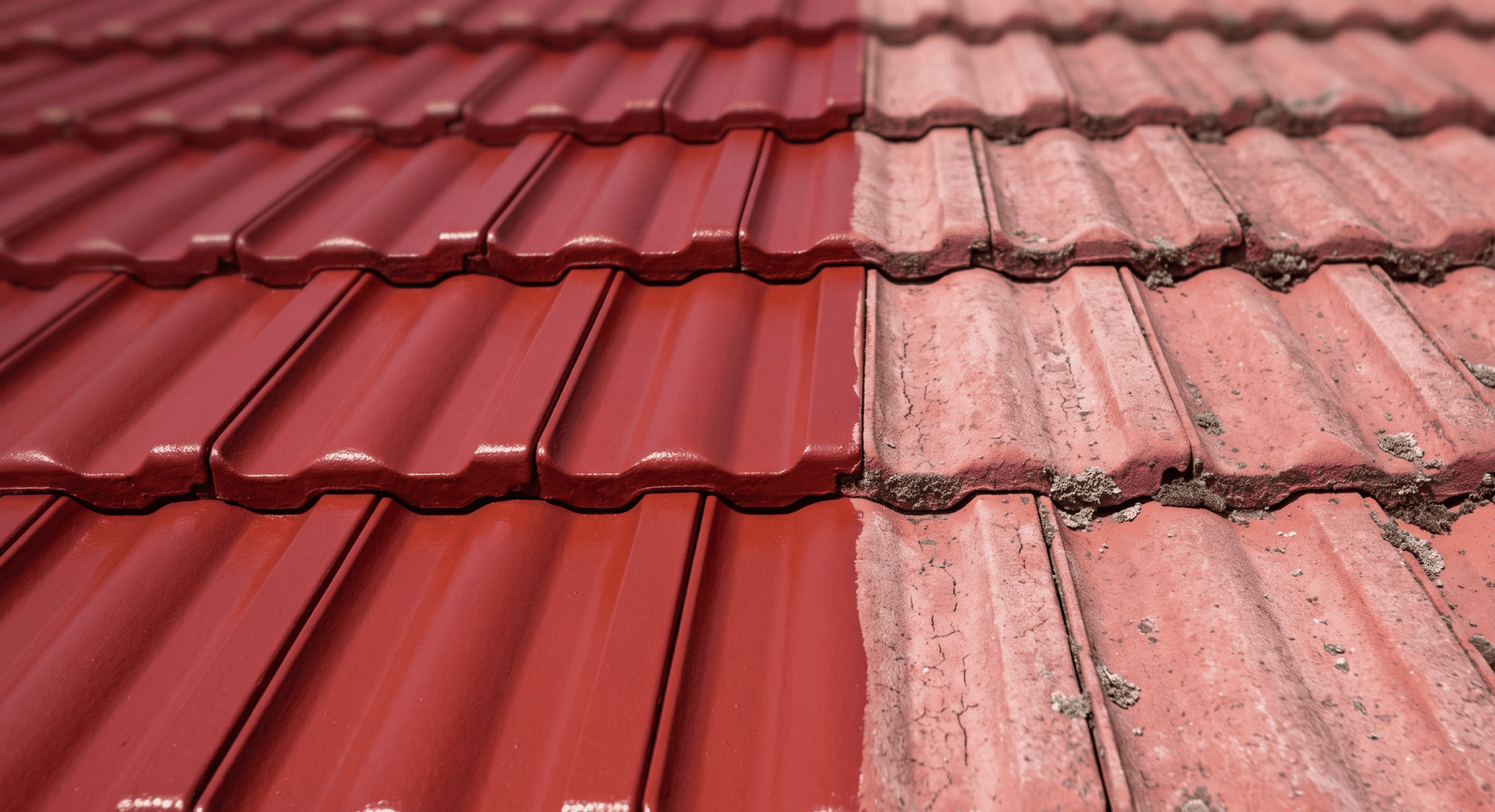
On north and west facing sections (which receive the most UV), chalking and colour fading commonly appear within 5 to 8 years on mid range products. The coating is still present and functional, but it is visibly aged. By 10 to 12 years, these sections often look noticeably different from the south and east facing sections that receive less direct sun.
On shaded or south facing sections, the coating holds its colour longer but is more prone to biological growth. Moss, lichen, and algae grow on the coating surface, particularly if the coating’s biocide additive has leached out (which typically happens within the first few years).
Across the full roof, most homeowners in Sydney find that their roof coating looks tired and is due for attention somewhere between 8 and 15 years after application. That is a long way from the 20 to 25 year claims on premium products.
This does not mean the coating has “failed” in a technical sense. It may still be providing water resistance and UV protection. But the visual appearance, which is one of the main reasons homeowners pay for a roof restoration in the first place, has deteriorated.
Why the Gap Exists
Several factors explain why real world performance falls short of laboratory claims.
Application conditions vary. The lifespan claim on a product assumes it was applied correctly: on a properly prepared surface, at the right film thickness, in suitable weather conditions, with the recommended number of coats. In practice, application quality varies between contractors. A coating sprayed too thin, applied in high humidity, or put on a surface that was not properly cleaned will not perform to specification.
Surface preparation is critical and often insufficient. The condition of the tile before coating determines how well the coating bonds and how long it lasts. Tiles that are not thoroughly cleaned, or that have residual moss, lichen, or old flaking paint, do not hold a new coating as well as a properly prepared surface. The best coating in the world will peel if the surface underneath is not right.
Sydney’s UV is more intense than many test conditions account for. Australia has some of the highest UV radiation levels in the world. Sydney, despite being at a moderate latitude, receives UV levels that are consistently higher than comparable cities in the Northern Hemisphere. Accelerated weathering tests may not fully replicate this intensity.
Thermal cycling in Sydney is significant. Roof surface temperatures in Sydney regularly swing from 20 degrees overnight to over 60 degrees during the day in summer. This constant expansion and contraction stresses the coating film and accelerates micro-cracking. Laboratory tests simulate cycling, but the pattern and intensity of Sydney’s real world cycles are difficult to replicate exactly.
Biological growth is persistent. Sydney’s combination of warmth, moisture, and airborne spores means that biological growth returns to coated surfaces faster than in drier climates. Once moss or lichen takes hold, it holds moisture against the coating, which accelerates degradation from the surface down.
What Homeowners Should Realistically Expect
Based on what roofers and homeowners report across Sydney, here is a more realistic lifespan guide for roof coatings on tiled roofs.
Premium acrylic coatings (high quality brands, properly applied with full preparation): 10 to 15 years of good visual appearance. Functional protection may extend beyond that, but a touch up or respray is typically needed for aesthetics.
Mid range acrylic coatings (solid products, standard application): 7 to 12 years of good visual appearance. These products do the job but show their age sooner, especially on high UV sections.
Budget coatings (lower cost products, sometimes applied by less experienced operators): 5 to 8 years before visible fading and chalking. These coatings offer shorter term improvement and may need attention sooner.
These are ranges, not guarantees. A premium coating applied by an experienced operator on a well prepared surface in a sheltered location may push past 15 years. A budget coating sprayed on a poorly cleaned roof in full north facing sun may look tired in four years.
What This Means for Homeowners
If you are planning a roof restoration, budget for a realistic recoat interval rather than relying on the maximum claim on the product label. Planning for a maintenance touch up at the 10 year mark gives you a more accurate picture of the total cost of keeping your roof looking good over a 20 or 30 year period.
Ask your restoration contractor what product they use, how many coats they apply, and what their realistic expectation for the lifespan is. A contractor who tells you “this will last 25 years, guaranteed” should be pressed on the specifics of that guarantee. Does it cover colour retention? Or just structural integrity of the film? These are very different things.
Get the preparation right. The coating is only as good as the surface it sits on. A thorough clean, full removal of moss and old flaking paint, and proper drying time before coating application all extend the real world lifespan of the finish.
The Role of the Tile Underneath
No matter how good the coating is, the tile underneath still matters. A concrete tile that is delaminating, crumbling, or heavily porous will not hold a coating well. The coating may look fine for a year or two, then start peeling or bubbling as moisture moves through the damaged tile body.
Before investing in a roof coating, have the tiles assessed. If individual tiles are beyond coating (cracked, delaminating, or structurally weak), replace them with matching recycled tiles or new tiles before the coating is applied. Coating over a bad tile is a waste of money.
At Roof Tile Recyclers, we supply both the tiles and the coatings. We stock roof paint and coating products alongside one of Sydney’s largest inventories of new and recycled tiles. If you need to replace a few tiles before a restoration, we can supply the matching tiles and the coating in one order.
The Bottom Line
Roof coating manufacturers are not lying about their products. The coatings do perform well in controlled tests. But the conditions on a roof in Sydney are harder than the conditions in a lab. UV is more intense. Thermal cycling is more aggressive. Biological growth is more persistent. And application quality varies.
Set your expectations based on real world performance, not label claims. Budget for a 10 to 15 year visual lifespan on a premium product, and treat anything beyond that as a bonus.
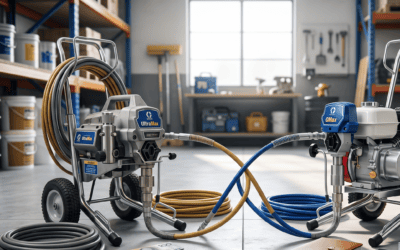
Contact Roof Tile Recyclers for tiles, coatings, and spray equipment for your next roof restoration.