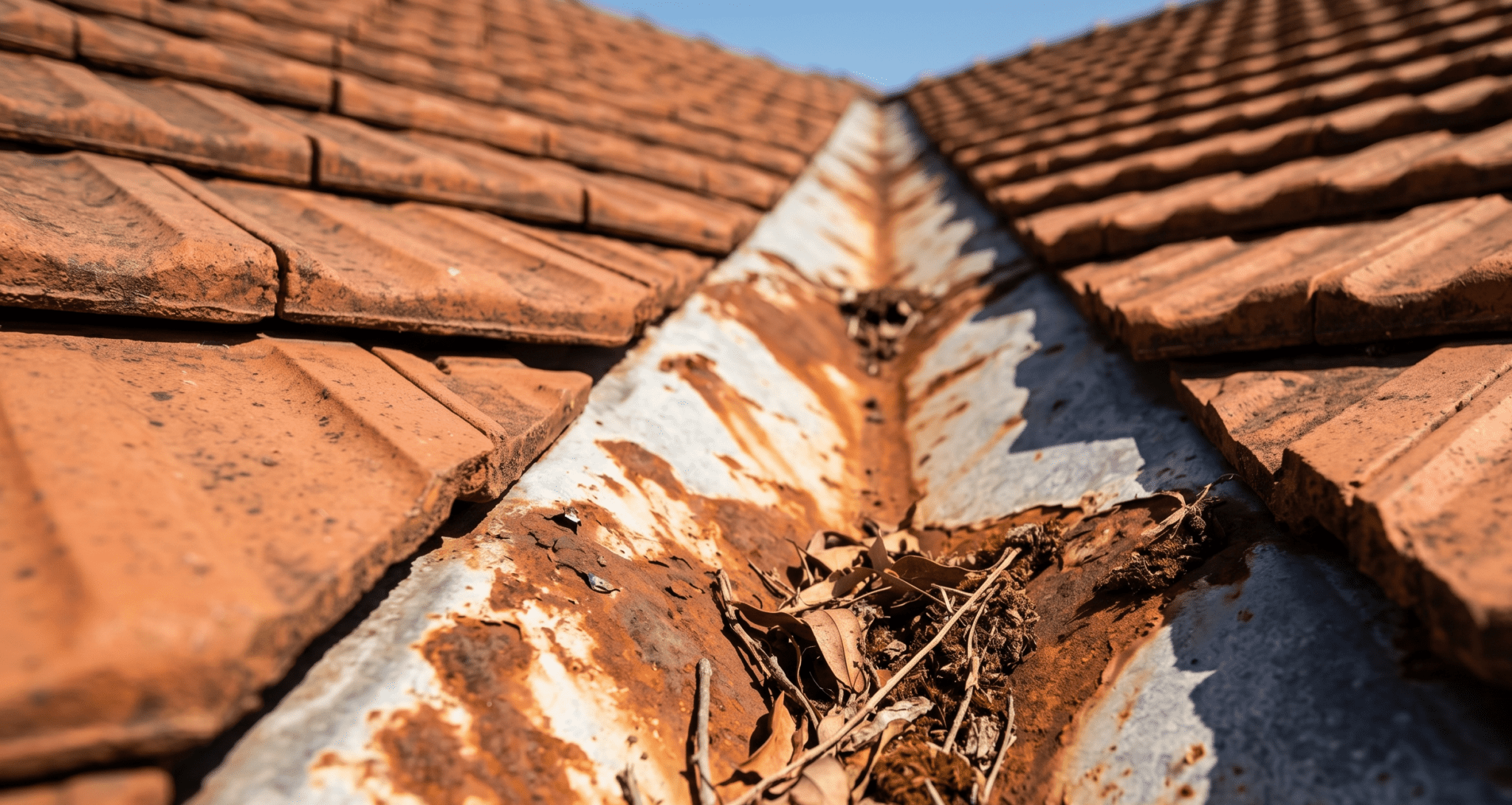
Valleys are the channels where two roof planes meet at an internal angle. On a tiled roof, these channels are lined with a metal trough called a valley iron (also referred to as a valley gutter or valley flashing). The valley iron sits underneath the tiles on both sides and carries water from the upper parts of the roof down to the main gutter.
It is one of the hardest working parts of the roof. Every drop of rain that lands on the two adjoining roof planes flows toward the valley and runs down the metal trough. During a storm, the volume of water passing through a valley can be significant.
When the valley iron rusts through, water goes straight into the roof cavity. And because valley leaks are often hidden behind tiles and inside the ceiling space, the damage can be extensive before anyone notices.
What Valley Irons Are Made From
Older homes in Sydney typically have valley irons made from galvanised steel. Galvanising is a zinc coating applied to steel to prevent rust. It works well for years, but the zinc layer wears away over time, especially in areas where water flows constantly.
Homes built in the 1960s, 1970s, and 1980s commonly have galvanised valley irons that are now 40 to 60 years old. The galvanised coating on many of these has worn through, exposing the bare steel underneath to moisture.
Newer homes may have valley irons made from Colorbond steel (which has a more durable coating system), stainless steel, or lead. Lead valleys are common on older terracotta and slate roofs and tend to last significantly longer than galvanised steel because lead does not rust.
The material your valley is made from determines how quickly it will corrode and when it will need replacing.
Why Valley Irons Rust
Galvanised valley irons rust because the protective zinc layer is gradually consumed by the corrosive environment it sits in.
Water flow is the primary driver. Water running over the zinc surface carries zinc ions away through a process called galvanic corrosion. The more water that flows over the surface, the faster the zinc depletes. Valleys handle more water than almost any other part of the roof, which is why they corrode faster than the metal flashings and ridge caps that sit higher and drier.
Debris accumulation accelerates the problem. Leaves, twigs, dirt, and moss collect in valleys because of the channelling effect. This debris traps moisture against the metal surface and creates a damp environment that promotes corrosion even during dry periods. Acidic runoff from decomposing leaves can also attack the zinc coating.
Chemical runoff from tiles contributes in some cases. Concrete tiles leach calcium hydroxide (lime) as they age, especially during the first few years after installation. This alkaline runoff can react with the zinc coating and accelerate its breakdown. Older concrete roofs that have been shedding lime for decades can show accelerated valley corrosion compared to terracotta roofs.
Proximity to the coast increases corrosion rates. Salt spray and higher humidity in coastal suburbs put additional stress on galvanised coatings. A valley iron in Campbelltown may last 40 years. The same product in a beachside suburb may corrode in 25.
How to Spot Valley Iron Problems
Most homeowners cannot see their valley irons from the ground because they sit between tile rows in a recessed channel. That makes valley problems easy to miss.
There are a few indicators you can look for without getting on the roof.
Rust staining on tiles near the valley line. If you can see reddish brown streaks running down the tiles below a valley, the iron underneath is rusting and the runoff is carrying iron oxide onto the tile surface.
Water stains on the ceiling. Valley leaks often show up as stains on the ceiling near internal corners of the house. If you have a water stain that aligns with where an internal roof valley sits above, the valley iron is a likely suspect.
Dripping in the roof cavity during rain. If you can access the roof cavity during a storm (safely, with a torch), check the underside of the valleys. Active dripping or wet timber along the valley line confirms a leak.
If you suspect a valley problem, get a roofer to inspect it. They can lift tiles adjacent to the valley and visually assess the condition of the metal.
When to Replace
The decision to replace a valley iron depends on the extent of the corrosion.
Surface rust (orange discolouration on the surface but no holes or thinning) is an early warning sign. At this stage, the valley is still functional but the zinc coating is depleted. A sealant or rust converter can extend the life by a few more years, but replacement should be planned.
Pitting (small holes visible in the metal) means water is getting through. Even if the leaks are not yet apparent inside the house, the valley is failing and needs replacing. Patching individual holes is a short term fix at best.
Structural thinning (the metal flexes or bends easily when pressed, or large rusted sections are visible) means the valley has reached the end of its life. Replacement should not be delayed.
As a general guideline, galvanised valley irons on homes in Sydney should be inspected at the 25 year mark and are commonly replaced between 30 and 50 years depending on conditions. Coastal properties tend to be at the shorter end of that range.
What Replacement Involves
Replacing a valley iron requires lifting the tiles on both sides of the valley, removing the old metal, installing a new valley trough, and relaying the tiles.
The new valley iron should be a higher grade material than the original. Colorbond or Zincalume coated steel is the standard modern replacement. For longer life, stainless steel or lead are available but cost more.
While the tiles are lifted, it is a good opportunity to inspect the battens underneath. If the valley has been leaking, the battens adjacent to the valley may have absorbed moisture and started to rot. Any damaged battens should be replaced at the same time.
The tiles that were lifted to access the valley can usually be relaid. However, some tiles may crack during removal, especially older concrete tiles that have become brittle. Having a few replacement tiles on hand for the job is a smart precaution. If your tile profile is discontinued, source the replacements before the job starts, not after tiles are broken.
Cost of Replacement
Valley iron replacement on a standard Sydney home typically costs between $800 and $2,500 per valley, depending on the length, the material chosen, and access requirements. A home with a simple gable roof may have one or two valleys. A more complex hip and valley roof design can have four or more.
Compared to the cost of repairing water damage caused by a failed valley (rotted battens, ruined insulation, ceiling replacement, mould remediation), the cost of proactive replacement is modest.
Prevention and Maintenance
You cannot stop galvanised steel from corroding eventually, but you can slow the process.
Keep valleys clear of debris. Leaves and organic matter sitting in the valley channel hold moisture and accelerate rust. Clear valleys during gutter cleaning, which should happen at least once or twice a year.
Address moss and lichen growth on tiles above the valley. Biological growth holds moisture and sheds acidic runoff that attacks the metal below.
Have the roof inspected every five to ten years, especially after the roof passes the 20 year mark. A roofer can check valley condition and flag problems before they become leaks.
If you are building new or re-roofing, specify a higher grade valley material. The incremental cost of Colorbond or stainless steel over basic galvanised steel is small relative to the total roof cost, and it adds decades to the valley’s lifespan.
Get the Right Materials
Roof Tile Recyclers stocks valley irons, flashing, and replacement tiles for valley repair jobs. If you need tiles to replace any that crack during a valley replacement, we carry both new and recycled profiles from Monier and Bristile.
Contact us for materials, pricing, or advice on valley replacement.