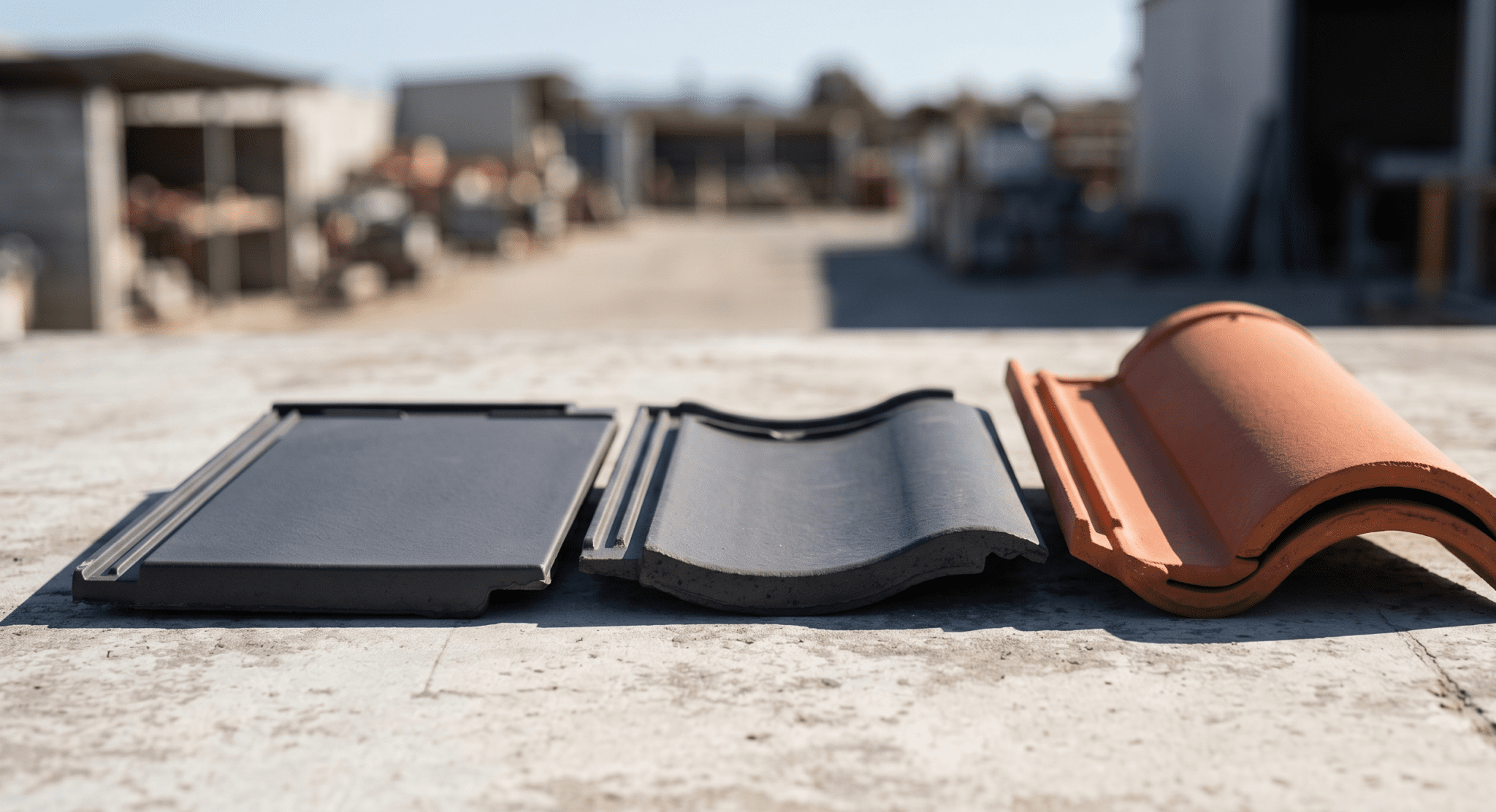
Walk down any residential street in Sydney and you will see three distinct roof tile shapes. Some roofs are sleek and flat, sitting close to the roof deck with clean lines. Others have a gentle wave or curve. And some have a bold, high barrel shape that gives the roof a textured, Mediterranean look.
These differences are not random. They come down to the tile profile, which is the cross sectional shape of the tile. Profile type affects how a roof looks, how it sheds water, how it handles wind, and how much it weighs. Choosing the wrong profile for your home can create aesthetic and functional problems that are expensive to fix.
This guide breaks down the three main profile categories so you can make an informed choice, whether you are building new, re-roofing, or sourcing replacement tiles for a repair.
What “Profile” Actually Means
The profile of a roof tile refers to its shape when viewed from the side. It determines the height of the tile above the batten, the way tiles overlap and interlock, and the visual texture the roof creates when viewed from the street.
Australian roof tiles generally fall into three profile categories:
Flat profile tiles have minimal height variation across the tile face. They sit close to the roof plane and create a smooth, uniform appearance. Low profile tiles have a shallow wave or curve, typically 15 to 25 millimetres of height variation. They add subtle texture without being visually dominant. High profile tiles have a pronounced barrel, S curve, or deep wave shape, often 30 to 50 millimetres of height variation. They create strong shadow lines and a bold visual statement.
Each category includes both concrete and terracotta options from manufacturers like Monier and Bristile.
Flat Profile Tiles
Flat profile tiles are the most popular choice on modern and contemporary homes in Sydney. Their clean lines suit the architectural style of new builds in suburbs across Western Sydney, the Hills District, and the South West growth areas.
From a functional standpoint, flat tiles sit tight against the roof deck. This gives them good wind resistance because there is less surface area for wind to catch underneath the tile. They are also slightly lighter per square metre than high profile tiles, which can reduce the structural load on the roof frame.
Water management on flat tiles relies on the interlock system between adjacent tiles. Because there is no barrel or channel to guide water, the overlap and side lock design must be precise. Modern flat profile tiles from Monier and Bristile are engineered for this, but older flat profiles (especially from the 1980s and 1990s) can develop water tracking issues if the interlocks have worn or shifted over time.
Visually, flat tiles make a roof recede. The roof becomes a background element rather than a feature. This suits homes where the facade, landscaping, or architectural form is the focus.
Common flat profiles include the Monier Horizon (now discontinued), Monier Cambridge, and Bristile flat ranges. If your home has a discontinued flat profile and you need replacement tiles, contact us to check availability.
Low Profile Tiles
Low profile tiles are the middle ground. They add just enough curve or wave to give the roof visual interest without dominating the streetscape. This makes them versatile across a wide range of home styles, from federation influenced builds to transitional designs that blend traditional and modern elements.
The shallow curve in a low profile tile creates natural water channels that help guide rain toward the gutters. This gives low profile tiles slightly better water shedding performance than flat tiles, especially on lower pitched roofs where water moves more slowly.
Wind resistance is good but not quite as strong as flat profiles. The slight height variation gives wind a little more to work with, but the difference is marginal for most Sydney wind regions. Proper fixing (nailing or clipping every tile) eliminates the issue in practice.
Low profile tiles are the most common type found on homes built in the 1970s through the 2000s. If you live in a home from that era, there is a strong chance your tiles are low profile. Many of these profiles have been discontinued, which makes finding replacements a common challenge.
At Roof Tile Recyclers, low profile tiles are some of our most requested recycled products. We carry a wide range of discontinued low profile tiles from both Monier and Bristile.
High Profile Tiles
High profile tiles make a statement. The deep barrel or S curve shape creates strong shadow lines across the roof, giving it a three dimensional texture that is visible from the street. This style is associated with Mediterranean, Spanish, Tuscan, and traditional Australian architecture.
Terracotta high profile tiles are the classic choice for this look. Profiles like the Monier Marseilles, Bristile La Escandella ranges, and various barrel tiles have been used on Australian homes for decades. Concrete versions of high profile tiles also exist and were widely used on project homes in the 1980s and 1990s.
Functionally, high profile tiles excel at water management. The deep channels between the barrels act as miniature gutters, moving water efficiently even in heavy rain. This makes them well suited to steeper roof pitches where water velocity is high.
The trade off is wind resistance. The taller the profile, the more surface area is exposed to uplift forces. High profile tiles need robust fixing, especially in coastal or elevated locations. In some wind regions, additional clips or adhesive may be required beyond standard nailing.
High profile tiles are also heavier per square metre than flat or low profile tiles. This means the roof structure needs to be designed (or verified) to handle the additional load. For re-roofing projects where you are changing from a flat to a high profile, an engineer may need to confirm the frame is adequate.
Matching Profile to Home Style
The profile you choose should complement the architecture of your home. Here are some general guidelines based on what works well in practice across Sydney.
Modern and contemporary homes (box forms, flat rooflines, minimal detailing) suit flat profile tiles. The clean lines of the tile reinforce the clean lines of the architecture.
Transitional and suburban homes (pitched roofs, brick facades, standard lot sizes) work well with low profile tiles. The subtle curve adds warmth without competing with the rest of the design.
Mediterranean, Tuscan, federation, and character homes suit high profile tiles. The bold shape adds authenticity and depth to styles that were historically built with barrel or shaped tiles.
Mixing profile types on the same roof is not recommended. Different profiles have different overlap dimensions, water flow characteristics, and fixing requirements. A flat tile next to a high profile tile creates misalignment and potential leak points.
What About Repairs and Replacements?
If you need to replace a few tiles on an existing roof, the profile must match exactly. A low profile tile cannot substitute for a high profile tile, even if the width and length are the same. The height difference will create a gap or an overlap that compromises waterproofing and looks wrong.
This is why identifying your existing tile correctly is so important. Take a photo of the tile face and the underside, measure the width and length, and note the height of the profile. Our guide on how to identify your roof tile walks you through the process.
Once you know your profile, check with a recycled tile supplier before assuming you need a full re-roof. At Roof Tile Recyclers, we stock tiles across all three profile categories from multiple manufacturers. We carry both new tiles and recycled options, and we deliver across Sydney and NSW.
Choosing the Right Profile for a New Roof
If you are building new or doing a complete re-roof, you have the freedom to choose any profile. Consider the architectural style, the roof pitch (some profiles perform better on steeper or shallower pitches), the wind exposure of the site, and the weight capacity of the roof structure.
Your roofer or builder can advise on which profiles are suitable for your specific roof design. From a materials standpoint, we can supply whatever you need.
Get in touch with Roof Tile Recyclers for advice on profile selection or to source tiles for your project.