Drive through any suburb in Sydney that was built in the 1980s or 1990s. Look at the roofs. Most of them started life in bold colours: terracotta reds, charcoal greys, deep browns, and even greens. Today, many of those same roofs look washed out, patchy, or grey.
Roof tile colour fading is one of the most common complaints homeowners have about their roofs. It does not affect the structural performance of the tile in most cases, but it changes the look of the entire house. And once fading starts, it raises questions. Is the roof failing? Does it need replacing? Can anything be done?
The answers depend on what type of tile you have and what is actually causing the colour loss.
How Concrete Tiles Get Their Colour
Understanding why tiles fade starts with understanding how they are coloured in the first place.
Concrete roof tiles are made from a mix of sand, cement, and water. The base colour of a concrete tile is grey. To give it colour, manufacturers apply a surface coating during production. This coating is usually an acrylic or oxide based layer that sits on top of the tile.
Some manufacturers also add oxide pigments into the concrete mix itself, which gives the tile colour through its full thickness. These are sometimes called “through coloured” tiles. They tend to hold their colour better over time because the pigment is not just on the surface.
The key point is this: on most concrete tiles, the colour is a coating. It is a layer on top, not part of the tile body. That layer is what fades.
How Terracotta Tiles Get Their Colour
Terracotta tiles work differently. Terracotta is made from natural clay that is fired in a kiln at very high temperatures. The colour of a terracotta tile comes from the clay itself and the firing process. Some terracotta tiles also have a glaze applied before firing, which fuses to the surface and creates a hard, coloured shell.
Because the colour is either inherent to the clay or baked into a glaze, terracotta tiles resist fading far better than concrete. A terracotta roof from the 1960s will still show its original colour tone, even if it has weathered and developed a patina over the decades.
This is one of the reasons terracotta is often preferred on heritage and character homes. The colour holds.
What Actually Causes Fading on Concrete Tiles
Several factors work together to break down the surface coating on concrete tiles.
UV radiation is the biggest one. Sydney gets high UV levels for most of the year. Ultraviolet light breaks down the chemical bonds in acrylic coatings, causing them to become chalky and lose their colour intensity. North and west facing roof sections fade faster because they receive the most direct sunlight.
Rain and moisture cycling also play a role. Water penetrates micro-cracks in the coating, gets into the porous concrete underneath, and then evaporates as the tile dries. This constant wet/dry cycle lifts and loosens the coating from below.
Biological growth speeds things up. Moss, lichen, and algae grow on roof tiles, especially in shaded or south facing areas. These organisms produce acids that eat into the coating. They also hold moisture against the surface, which accelerates the breakdown.
Air pollution contributes in urban areas. Particulate matter and chemical residues from traffic and industry settle on roof surfaces and react with the coating over time.
None of these factors act alone. It is the combination of UV, moisture, biology, and pollution working together over years that strips the colour from a concrete tile.
Can You Prevent Fading?
You can slow it down. You cannot stop it completely.
Keeping the roof clean helps. Removing moss, lichen, and debris reduces the biological and moisture damage. A professional roof clean every few years can extend the life of the surface coating.
Applying a sealant or protective coating after cleaning can add a layer of UV resistance. However, this is a maintenance step, not a permanent fix. The sealant will also degrade over time and need reapplication.
Choosing through-coloured concrete tiles for a new roof (rather than surface-coated tiles) gives better long term colour retention. The pigment runs through the full depth of the tile, so even if the surface wears, the colour underneath is the same.
For existing roofs where the colour has already faded significantly, the most common solution is repainting. A roof restoration that includes cleaning, repairs, repointing, and a fresh coat of roof paint can make a faded roof look new again. But it is worth understanding that the new paint layer will also fade over time, just like the original coating did.
The Myth of “Colour Safe” Tiles
Some homeowners believe that certain concrete tile brands or colours are fade proof. This is not accurate. All surface coated concrete tiles will fade to some degree when exposed to Australian UV levels over 15 to 25 years. Darker colours tend to show fading more obviously than lighter ones, but no colour is immune.
Manufacturers have improved their coatings over the decades. Tiles made in the 2020s generally have better UV resistance than tiles made in the 1980s. But “better” does not mean “permanent.” The physics of UV degradation apply to all organic coatings regardless of brand.
If a roofing company tells you that a particular concrete tile will never fade, treat that claim with caution.
When Fading Signals a Bigger Problem
In most cases, colour fading is cosmetic. The tile underneath is still doing its job of keeping water out. But there are situations where fading is a warning sign.
If the surface of the tile feels soft, powdery, or crumbly to the touch, the concrete itself may be degrading. This is called delamination, and it means the tile is losing structural integrity. A tile that has delaminated is not just faded. It is failing.
If you can see the aggregate (small stones) in the concrete through the surface, the coating and the top layer of cement paste have worn away completely. At this point, the tile is more porous than it should be and is absorbing more water than intended.
If fading is uneven and accompanied by dark staining, cracking, or visible moss penetration into the tile body, the issue has gone beyond cosmetic. A roof tile specialist can assess whether the tiles need replacing or whether a restoration will be enough.
What About Replacing Faded Tiles?
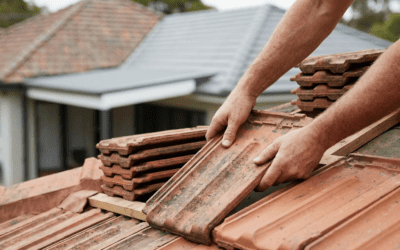
If only a section of your roof has faded badly (often the north or west facing side), you may be able to replace just those tiles rather than restoring the entire roof. The challenge is finding replacement tiles that match the colour of the unfaded sections.
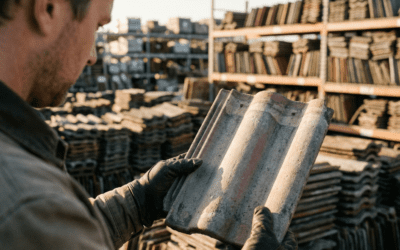
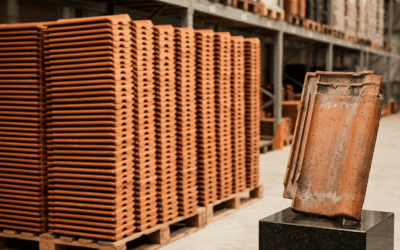
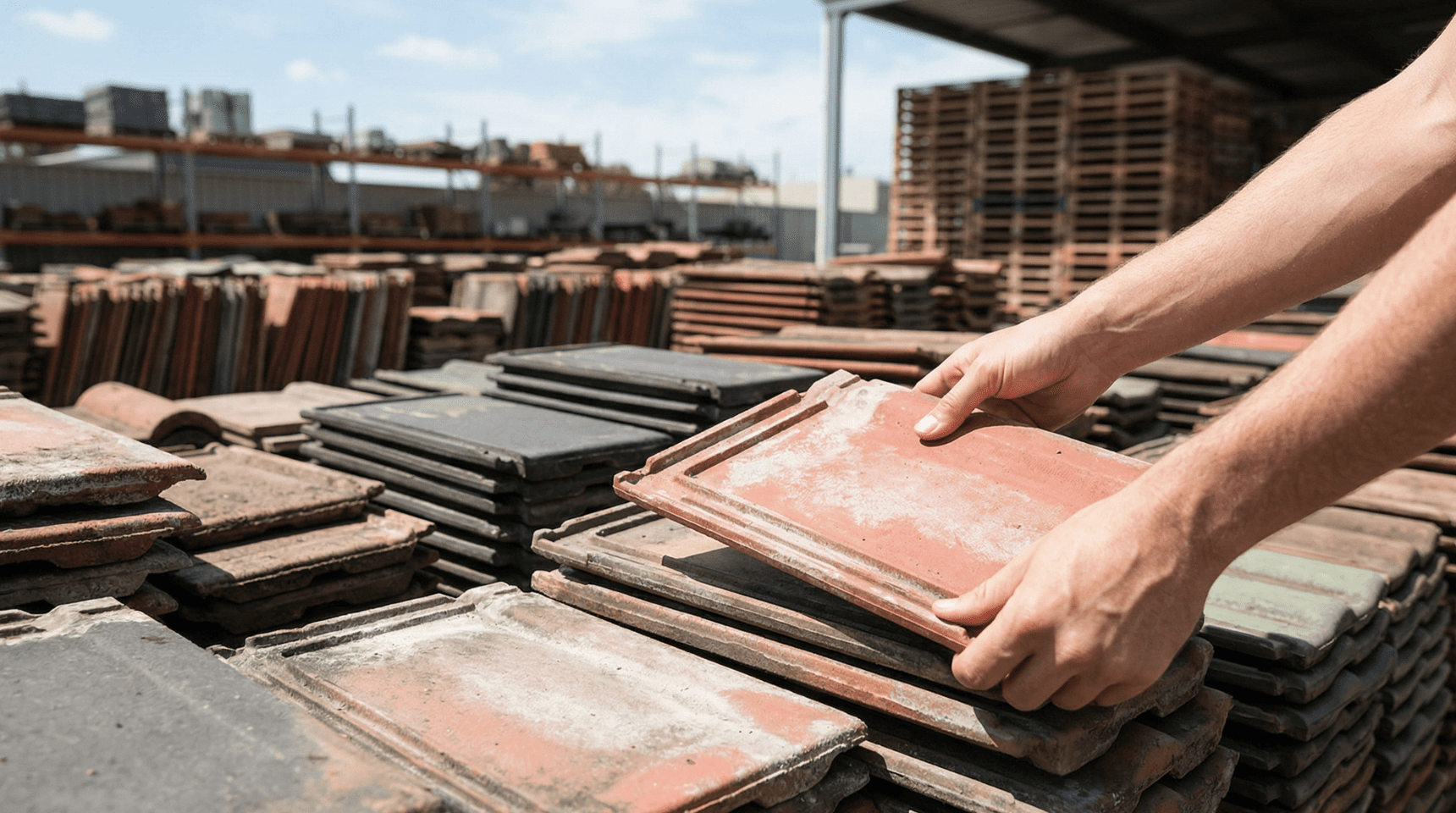
This is where recycled tiles can be useful. A second hand tile that has aged in a similar way to your existing roof may be a closer colour match than a brand new tile straight from the factory. New tiles are too bright and too uniform to blend with a 20 year old roof.
At Roof Tile Recyclers, we carry a wide range of concrete and terracotta tiles in various stages of natural weathering. If you need a colour match for a partial repair, our team can help you find tiles that blend with what you already have.
The Bottom Line on Colour Fading
Concrete tiles fade. It is built into the way they are made. Terracotta tiles resist fading because of how they are coloured. Neither type is maintenance free, but terracotta requires less cosmetic upkeep over its lifetime.
If your roof has faded and you are weighing your options, the choice is usually between a full restoration (clean, repair, repaint) or a targeted replacement of the worst affected tiles. Both are valid approaches depending on the condition of the roof and your budget.
Need help finding replacement tiles that match your existing roof colour? Get in touch with Roof Tile Recyclers and we will help you find the right match.